

New York State: FY2027 Final Budget Summary
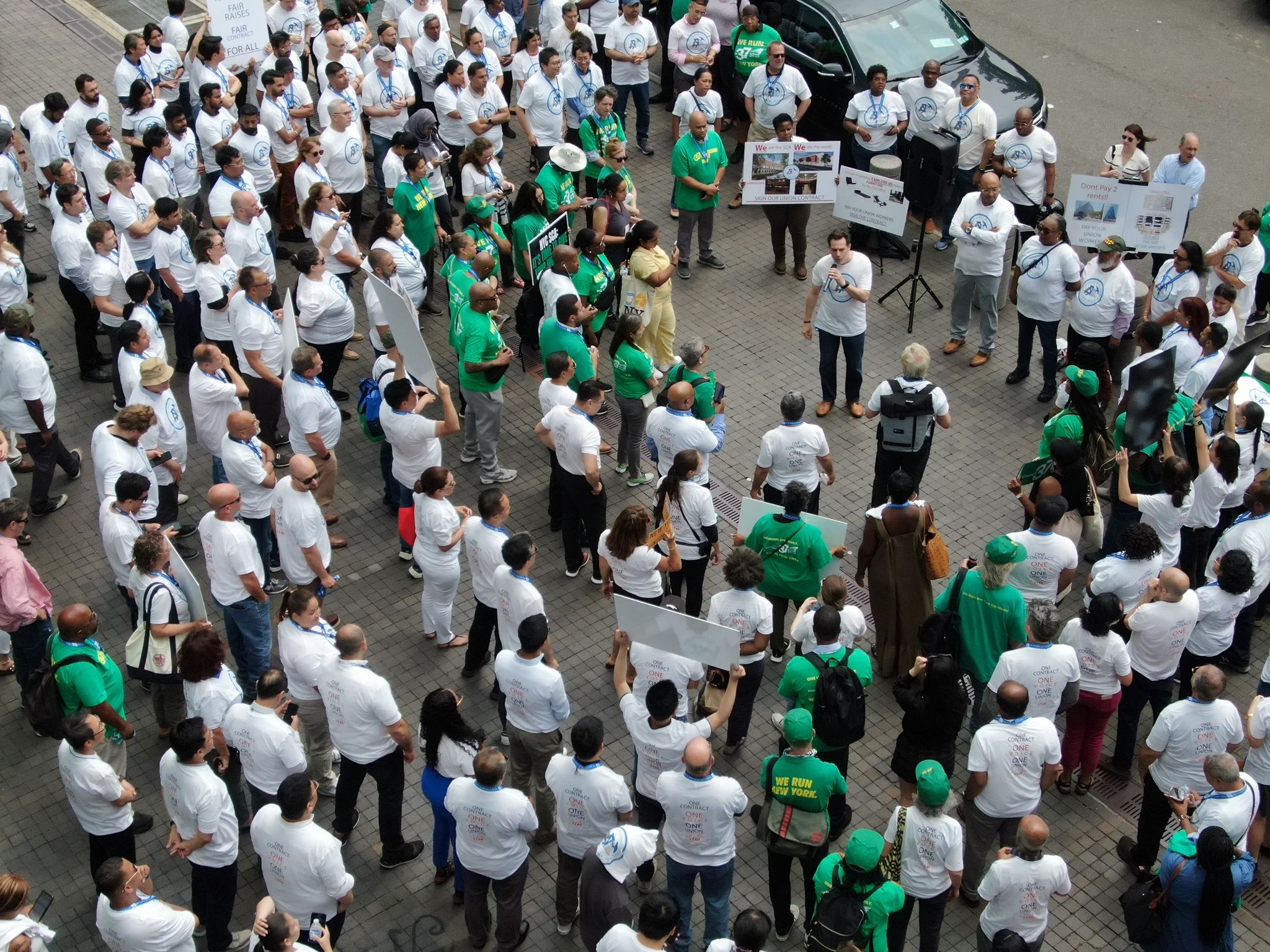
The enacted FY2027 State Budget delivers meaningful victories for District Council 37 members and the communities we serve. Through strong advocacy and member engagement, we secured significant Tier 6 reforms, expanded access to affordable childcare, and restored critical funding for New York City services. These achievements provide immediate relief for working families while strengthening economic and retirement security for the future.
Statewide
Substance Abuse Prevention and Intervention Specialists (SAPIS):
The budget dedicated $2 Million to SAPIS funding.
Cost of Living Adjustment (COLA) for Direct Support Professionals under OPWDD:
The budget includes a 2.7% inflationary increase for various human service employers in the not-for-profit sectors.
Tier 6 Reform:
Tier 6 passed in 2012 and dramatically reduced retirement benefits for public employees. Tier 6 members face higher contribution requirements and reduced benefits compared to workers in earlier pension tiers. Nearly two-thirds of all New York public sector workers are now in Tier 6.
We’ve made some progress in recent years to improve Tier 6, including changing the pension vesting time from 10 years to 5 years and fixing the Final Average Salary (FAS) calculation from 5 years to 3 years. These recent victories demonstrate what is possible when members make their voices heard.
Through advocacy, grassroots action, and engagement with elected officials, DC 37 helped deliver meaningful improvements in the FY2026 that will benefit current and future public workers across New York State.
For members of the New York State Employees’ Retirement System (NYSERS), the New York State Police and Fire Retirement System (PFRS), the New York City Employees’ Retirement System (NYCERS) and the New York City Board of Education Retirement System (NYCBERS), effective Oct. 1, 2026, employee contributions will be reduced for newly established salary bands as follows:
| Salary Range | New Contributions | Old Contributions |
| $0 – $75,000 | 3% | $0 – $45k – 3% $45k – $55k – 3.5% $55k-$75k – 4.5% |
| $75,001 – $100,000 | 4% | 5.75% |
| $100,001 – $125,000 | 5.25% | 6% |
| $125,001 | 5.75% | 6% |
We also secured revisions to overtime: Effective Jan. 1, 2027, the amount of pensionable overtime for members will increase from $22,500 to $30,000 and will be indexed annually at 3%.
Why was the Contribution Rate a Priority this Session?
75,000 DC 37 members are in Tier 6 and reforming the contribution band will help the most of our lowest paid members. We still have time to fix the contribution rate! Tier 6 was established in 2012, meaning workers will not benefit from lowering the retirement age until 2042, when the first Tier 6 members could reach 30 years of service.
What’s Next for Tier 6?
While these reforms represent significant progress, our work is not finished. DC 37 remains committed to pursuing additional reforms that will further improve retirement security and create a more equitable pension system for all public employees.
New York City
This enacted budget includes $5 billion in state support for New York City to help close its $12 billion budget deficit. This is done through several measures including new aid, savings authorizations for the City, and the new pied-à-terre tax.
- New one-time and state-recurring aid: $1.9 billion
- Savings authorizations: $2.8 billion
- Pied-à-terre tax: $500 million
Pied-à-terre tax in New York City:
A new tax on non-primary homes that are valued at $1 million or more in New York was passed and is expected to raise $500 million annually.
ZEV School Bus Mandate Date Changes:
The deadlines for school districts to transition to zero-emission school buses were pushed back 5 years.
Intelligent Speed Assistance Device Pilot Program in New York City:
Drivers who receive multiple speed violations in school speed zone areas may be required to install such devices for specific periods.
Protecting our Wallets Energy Rebates (POWER):
The “Protecting our Wallets Energy Rebates” will allow income eligible taxpayers who filed state returns in 2024 to claim a tax rebate of $100, $150 or $200 (depending on their income and filing status in 2024) on their 2027 filings. Those married filing jointly with incomes under $300,000 and all other filers with incomes of $150,00 or less will be eligible.
Sustainable Future Fund:
New funding of $1 billion for the Sustainable Future Fund was included. This funds various programs including thermal energy networks, solar development, and green schools.
Education Funding:
The budget includes a $1 billion increase in school aid for a total of $39 billion for the 2026-2027 school year. This includes a 2% increase in Foundation Aid.
State Aid for SUNY/CUNY/Community Colleges:
The budget includes $15.1 billion in total state aid for State University of New York (SUNY) and $6.7 billion for City University of New York (CUNY). Also included is $20 million for Community College Base Aid.
Child Care:
The final budget includes $1.7 billion in increased funding for child care, bringing the total investment to $4.5 billion.
- Expansion of Universal Pre-Kindergarten: School districts across the state will be required to offer full-day, pre-k for four-year-olds with State funding by the start of the 2028-2029 school year.
- Expansion of New York City Child Care Programs: A new “2-Care” program will provide child care for two-year-olds, and an increase in funding was allocated to expand New York City’s pre-kindergarten program for three-year-olds.
Health Care:
- $750 million in new targeted healthcare investments, including a $353 million rate increase, a $47 million capital rate increase, and $240 million of state share increases for nursing.
- $500 million in operating funding for financially distressed hospitals, providing a $2.1 billion total state share.
Legislative Policy Items in the Enacted Budget
Immigration Protections and Restrictions on Immigration Enforcement by the Public Sector:
- Prohibits state and local law enforcement, correctional facilities, and related agencies from partnering with the federal government to enforce immigration laws or detain individuals for federal immigration violations.
- Bars public-sector employees from assisting federal immigration enforcement unless presented with a valid judicial warrant or court order; requires training and procedures to verify such documents.
- Protects access to public education regardless of immigration status and prevents school and pre-K employees from participating in immigration enforcement absent a court order or judicial warrant; the state education department will provide compliance guidance.
- Prohibits police officers, peace officers, and federal law enforcement officers from wearing face coverings while interacting with the public and carrying out official duties.